Red-Legged Partridge

Game farms in Europe began breeding the Red-Legged Partridge centuries ago. Here at MacFarlane Pheasants, Inc. we have been importing these Red-Legged Partridge eggs since 2009. We are the only commercial producer of Red-Legged Partridges in the United States.
In 2009, one of our longtime customers approached us asking if we could raise Red-Legged Partridges. After looking into it, we decided these partridges would be the perfect addition to our farm.
In order to import these eggs, we must file an application with the federal government 3 weeks prior to shipment for an import permit. Upon approval, the eggs go to Chicago where the U.S. Fish & Wildlife examine the eggs for clearance into the United States.
Once we began importing these partridges, they quickly become our favorite partridge. Here are few reasons why. These birds are:
- Easy to raise in captivity
- Hardy and able to withstand extreme climates
- Flighty, wild and easily excitable
Because of these characteristics, Red-Legged Partridges are one of the best birds to hunt. Many American hunters travel to the U.K. regularly to participate in shoots for these partridges. The flight, speed and wildness of these birds continuously amaze hunters, and provides them with a more challenging and exciting hunt.
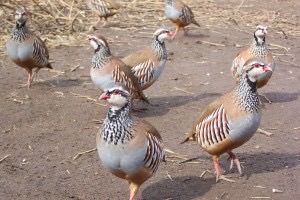
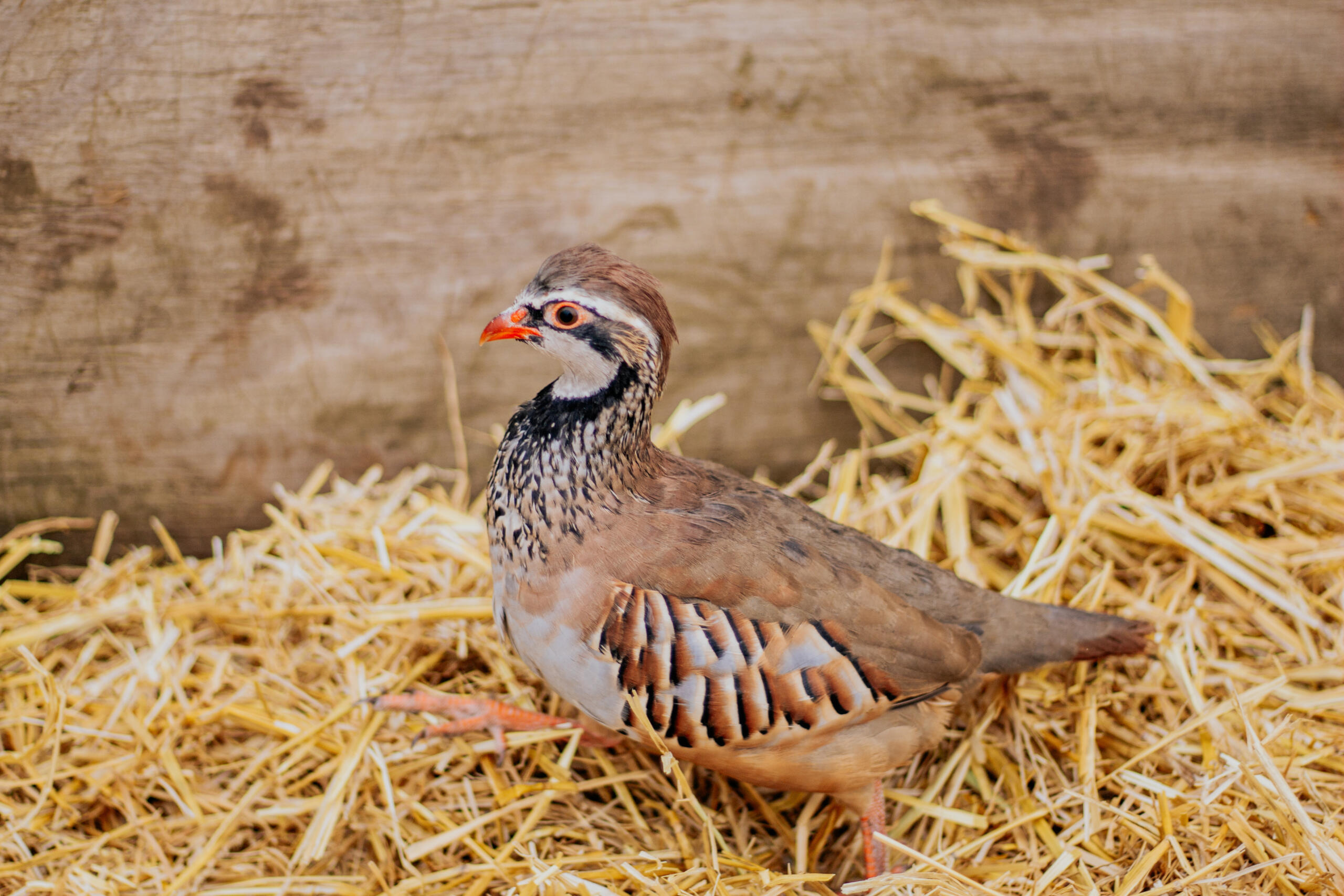
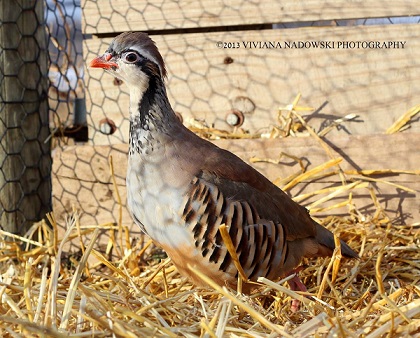
The Red-Legged Partridges maintain a stellar uniformity. These birds have light brown backs, gray breasts and buff bellies. Of course, their red legs set them apart, as well as their streaked flanks. They typically weigh between 19 and 26 ounces and are 13 to 15 inches in length.
These partridge chicks like warmer temperatures and require brighter “A” and “B” room lighting than pheasants. It is important to treat these chicks as if they are afraid of the dark. Lights must be on 24 hours a day or else the chicks will pile up, leading to suffocation. Partridge chicks spend about four weeks in the “A” room and five weeks in the “B” room.
At 9 weeks, their feathering is good enough for outdoor pens and it is time to move the partridges. Once moved outside, they will spook easily. It is important to switch netting to a 1.5-inch weave at this point to prevent birds from escaping. Outdoor pens should allow 10 square feet per bird. Huts, or shelter of some kind, are also necessary to keep the birds out of the elements. These partridges prefer warm and bright climates, though they are hardy and able to withstand extreme temperatures. They also prefer grassland-like habitats, which includes small grain and bushy terrain.
Red-Legged Partridges also thrive on consistency. It is crucial to do chores the same way each time. Straying from the normal routine can lead to the entire flock flushing. Read more details on our Red-Legged Partridge Breeding Protocols by downloading the full list below.

We have received nothing but positive feedback since we began selling the Red-Legged partridges on our farm. Several game farms have commented on the exemplary performance of these birds. Here are a few testimonials from game farms that have been impressed by the performance of these birds.
If you are looking for a bird to add to your game farm that will add excitement and new challenge to your hunts, our partridges will be the perfect addition. Call us today to find out more information or request a quote on our mature pheasant quote page.
What are current Red-Legged owners saying?
“I remember several years ago when the concept of using Pure Red-Legs on the East Coast was becoming a reality. I talked to Bill MacFarlane and credit him for pointing me in the right direction on the pure Red-Leg and advising me to purchase MacFarlane’s Red-Leg stock. As a third generation game bird and hunting preserve operator I had never had one species of game bird where there was never one minor complaint about performance in a given season from a single customer. The stock from MacFarlane was the exception, as I have not had one single complaint in five years of selling. Their performance is exemplary and I would recommend his stock to anyone interested in getting into raising and selling of Red-Legs.” – Mike Martz, Martz Game Farm
“The Redleg partridge are easy birds to take care of and hold. They are a heartier bird that doesn’t get sick or lose weight after being held for several weeks. They are more stocky and appear to be more muscular than their chukar counterparts. The mortality is extremely low. When these birds get into the field, watch out! Their explosiveness is 2nd to none. They fly higher than the chukars, which makes for a safer shot. Our guides (and dogs) appreciate this attribute. They do have a tenancy to covey a bit, but it just makes for that much more excitement when they break out. Hunting them is a real blast (no pun intended). If you are looking to change things up a bit from the normal chukar, these are the way to go. They may cost a little bit more, but you certainly get what you pay for in this wild and explosive bird. ” – John Burke, Halter Wildlife