Hungarian Partridge

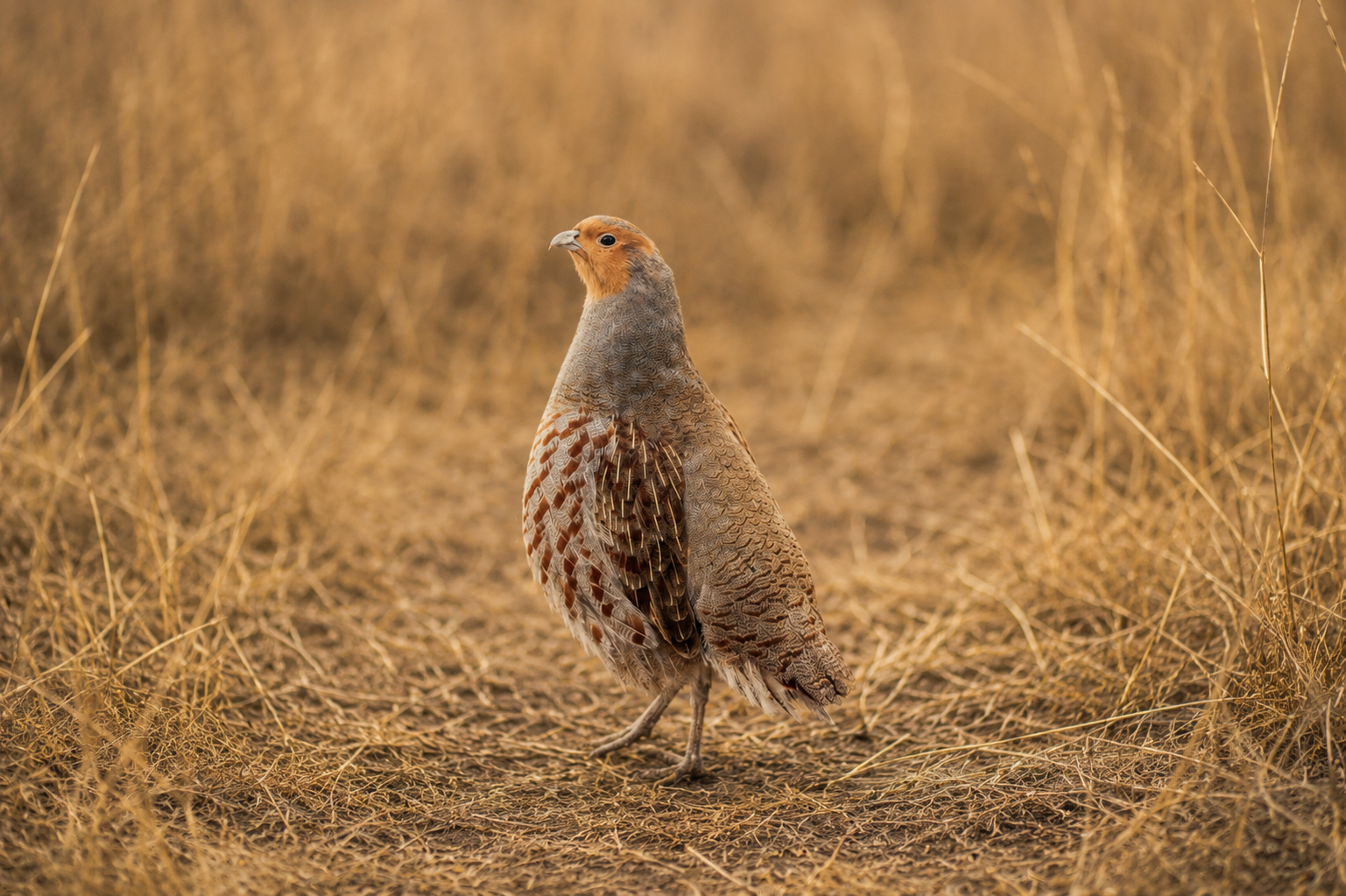
Hungarian partridge, also known as “grey partridges”, closely resemble grouse. These birds are hardy and love to travel in groups. They are very vocal birds and are also favorite additions to gamebird hunts. Their brown markings allow them to blend in to their surroundings well. These birds pair up and mate for life. The Ideal habitat for a Hungarian partridge would consist of about 65% small grains, and the rest in short native grass around 2 feet in height. Small brushy bushes, often found on the edge of roads and fields make great wind barriers for the birds. The Hungarian partridge is great for propagating small farms.
FAQs About Hungarian Partridges

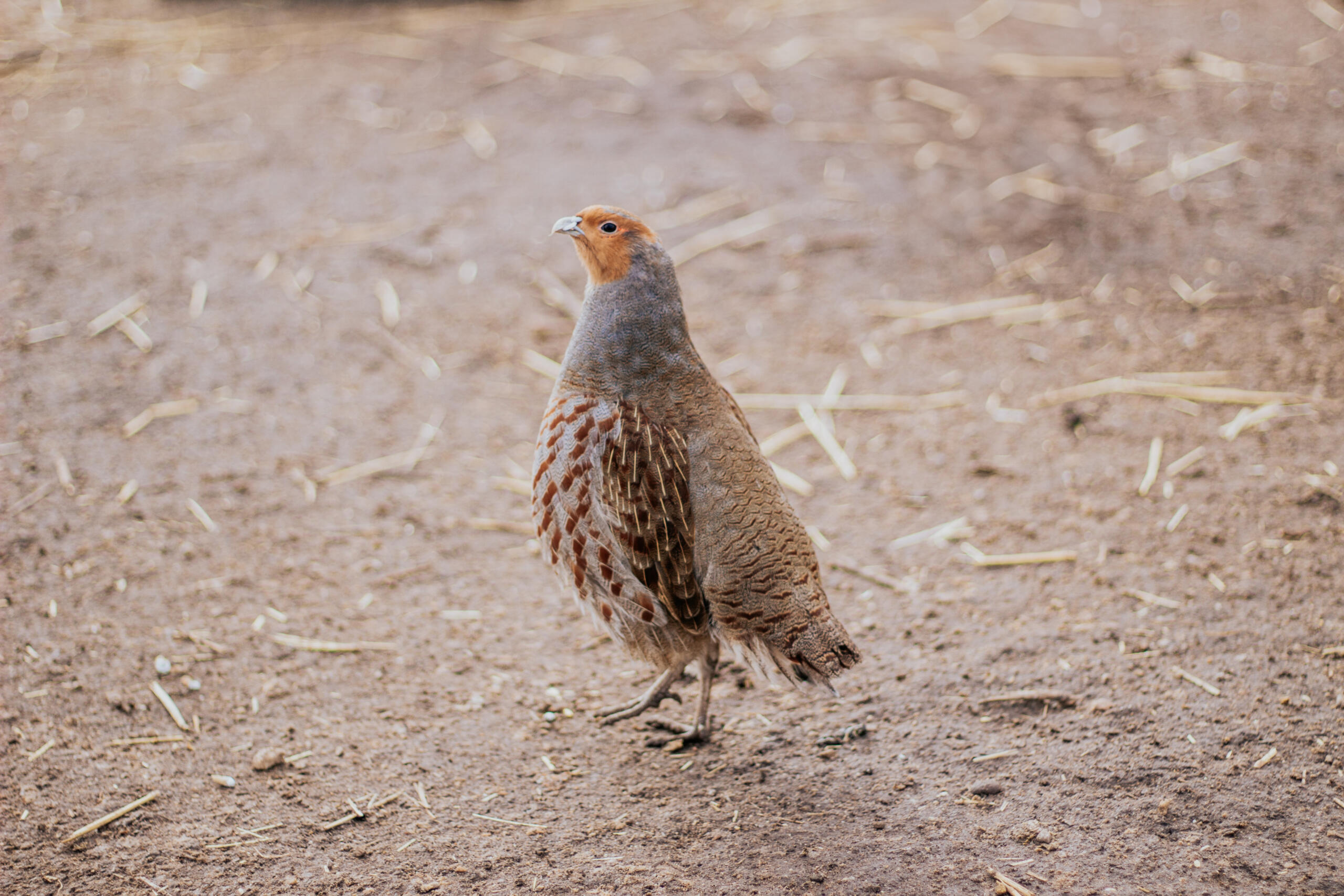
Hungarian partridges have a subtle but distinctive appearance that helps them blend into grasslands and agricultural fields.

Adults typically feature:

  • Gray face and breast
  • Chestnut-colored face patches
  • Brown-barred back and wings
  • Rust-colored tail
  • A compact body with a short tail

Males often have a noticeable chestnut “horseshoe” marking on their belly, while females usually have a smaller or less defined patch.

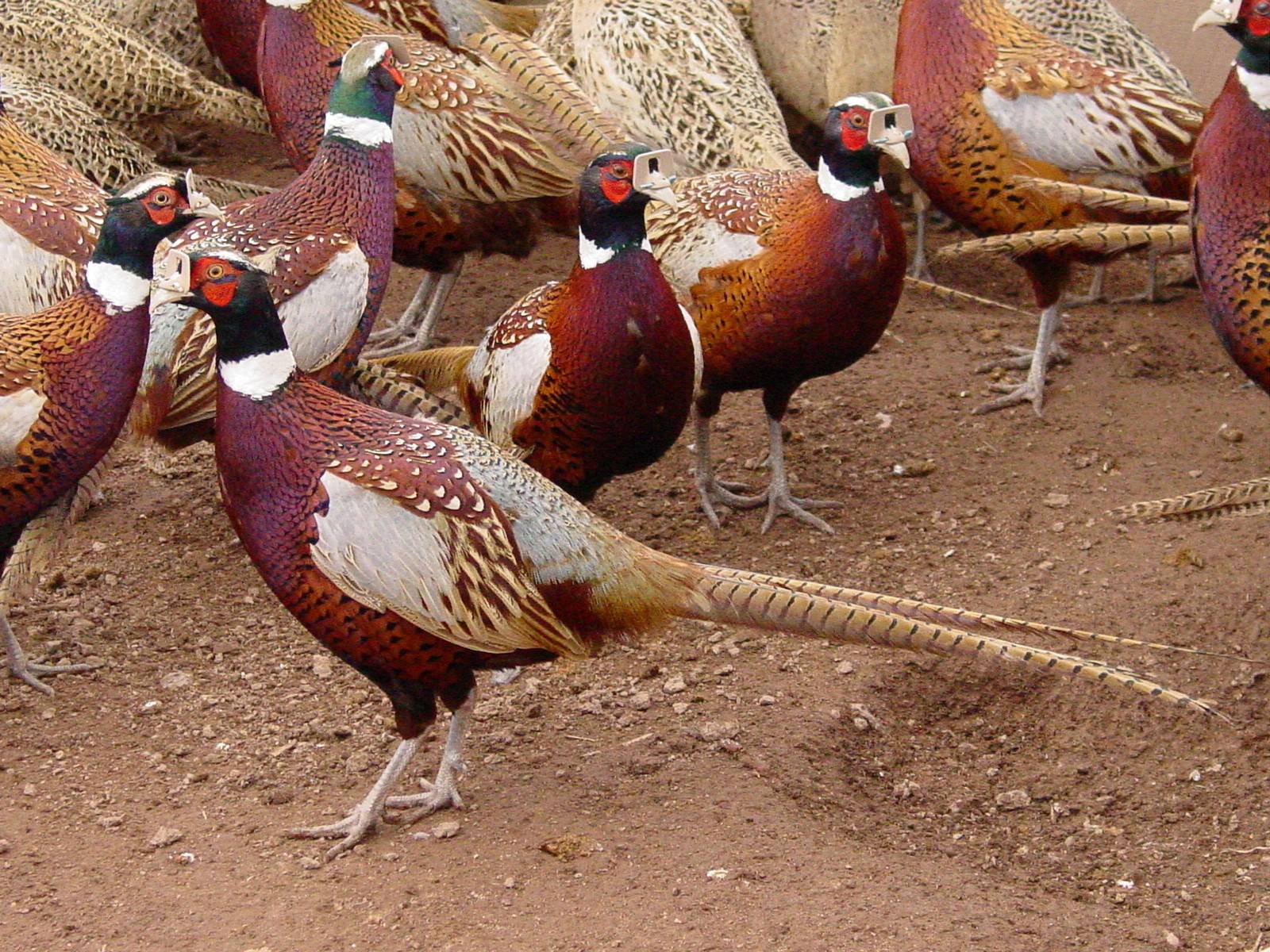
While both are upland game birds, Hungarian partridges and pheasants differ in several ways.

Hungarian partridges are:

  • Smaller and lighter
  • Covey birds that stay together in groups
  • Known for quick, low, explosive flights
  • Excellent for challenging dog work

Ringneck pheasants are:

  • Larger birds
  • More likely to flush individually
  • Known for powerful, high-flying flushes
  • A favorite for traditional upland pheasant hunting

Many hunting preserves offer both species to create a more varied hunting experience.

Yes. Hungarian partridges are highly regarded by upland hunters because they flush quickly, fly fast, and often stay together in coveys before breaking in multiple directions.

Their unpredictable flight patterns make them an excellent choice for experienced hunters and bird dogs looking for a rewarding challenge.

Hungarian partridges thrive in open landscapes with a mix of grasslands and farmland.

Preferred habitat includes:

  • Native grasslands
  • Hayfields
  • Grain fields
  • Brushy fence rows
  • Prairie habitat
  • Light shrub cover

They rely on quality nesting cover and nearby food sources throughout the year.

Yes. Hungarian partridges are excellent flyers.

When startled, they flush rapidly with loud wingbeats before flying low and fast across open fields. Their speed and tendency to fly in coveys make them one of the most exciting upland game birds to hunt.

Yes. MacFarlane Pheasants offers mature Hungarian partridges for hunting preserves, dog training, game bird operations, and other approved uses.

Our mature birds are carefully raised with an emphasis on bird health, quality, and dependable field performance, helping customers create successful hunting and training experiences.

Contact us for more details or with any questions.

Read More About Hungarian Partridges

  • Raising Hungarian Partridges is Challenging and Exciting!

    Read Post

  • Photo of Hungarian Partridges

    Steps to Raising Hungarian Partridges—It’s Worth the Challenge!

    Read Post

  • Extra Large Pheasants

    Choosing the Right Type of Game Bird

    Read Post