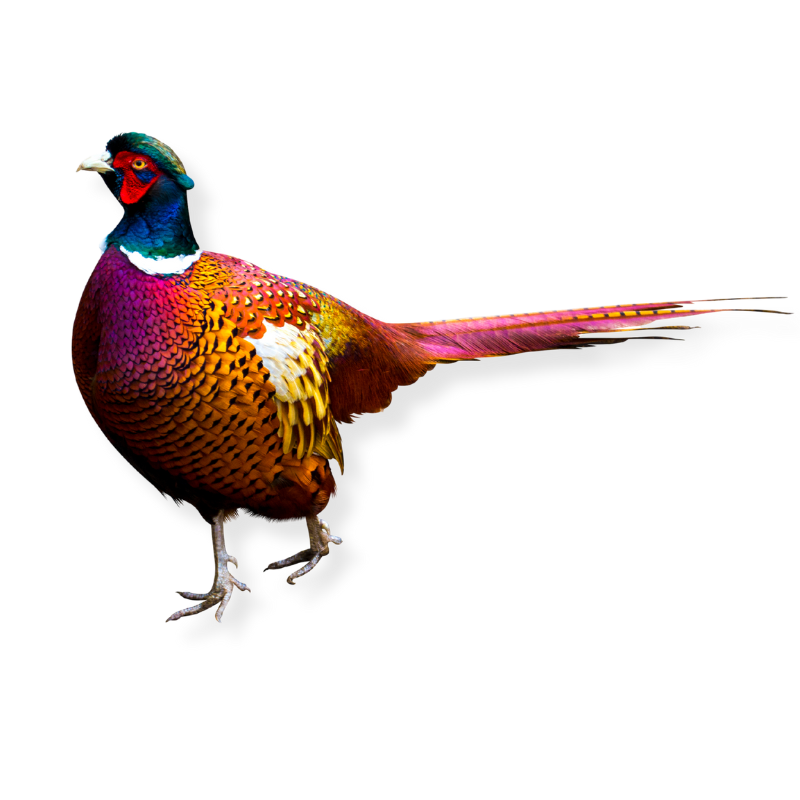
The Complete Guide to Pheasant Taxonomy
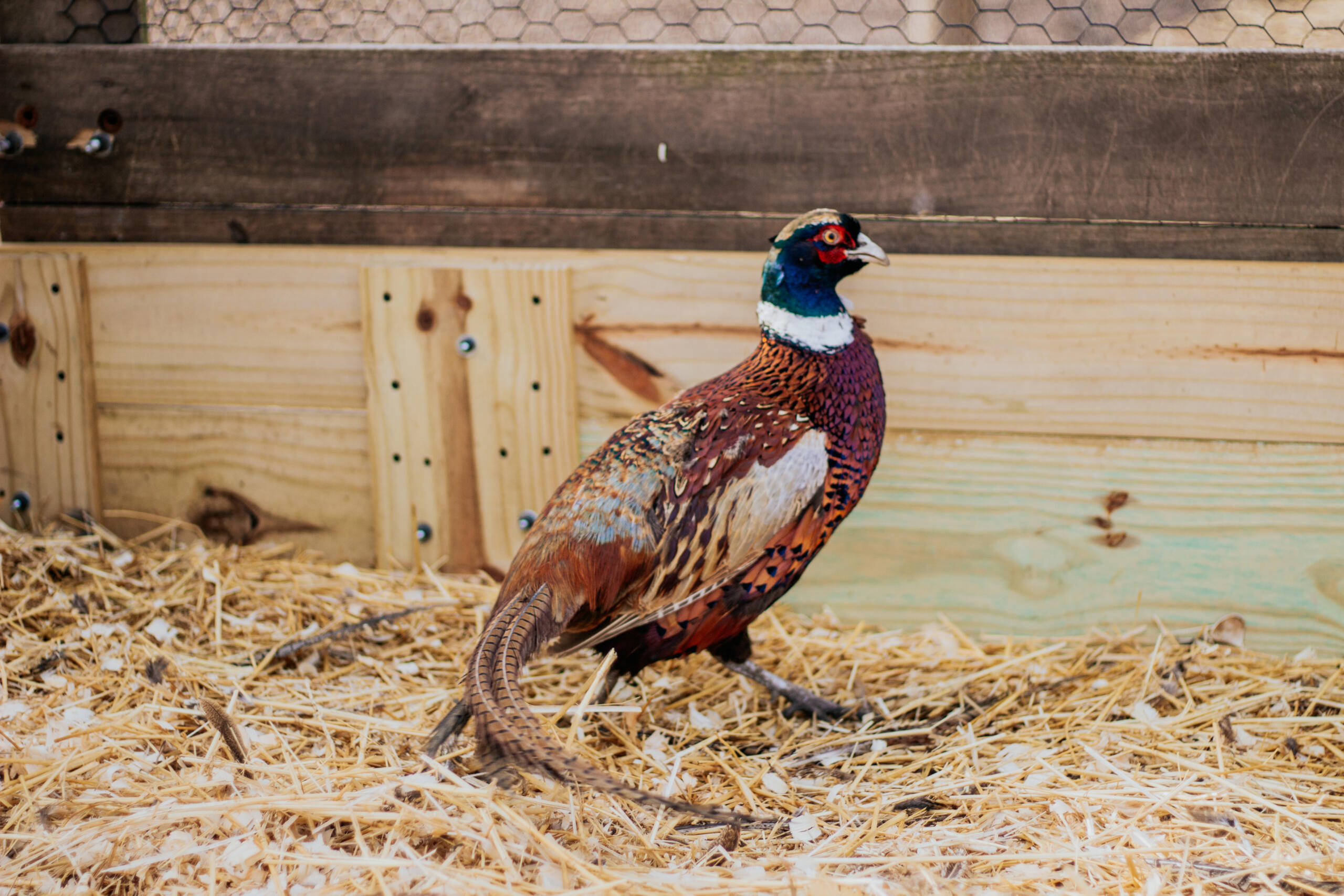 Whether you’re a bird enthusiast, hunter, conservationist, or gamebird breeder, you’ve probably wondered just how many kinds of pheasants exist. While many people are familiar with the Ring-necked Pheasant, it’s only one member of a fascinating group of birds that includes some of the most colorful and unique species on Earth.
Modern pheasant taxonomy is continually evolving as scientists use DNA analysis alongside traditional physical characteristics to better understand how these birds are related. As a result, the classification of pheasants today differs in several ways from older field guides and historical references.
In this guide, we’ll explore the major groups of pheasants recognized by modern ornithologists, explain how they fit into the bird family tree, and introduce many of the remarkable species found throughout Asia and beyond.
What Is Taxonomy?
Taxonomy is the scientific system used to classify living organisms based on their evolutionary relationships. Every bird belongs to a series of increasingly specific groups.
For pheasants, the basic classification looks like this:
| Classification Level | |
|---|---|
| Kingdom | Animalia |
| Phylum | Chordata |
| Class | Aves |
| Order | Galliformes |
| Family | Phasianidae |
Within the Phasianidae family are pheasants, partridges, junglefowl, peafowl, turkeys, quail, and several other ground-dwelling birds. Modern genetic research has shown that many of these birds share common ancestors despite looking quite different today. (WorldBirdNames.org)
The Pheasant Family (Phasianidae)
The family Phasianidae contains nearly 200 living species spread across dozens of genera, making it one of the largest and most diverse bird families in the world. Members of this family inhabit forests, grasslands, mountains, agricultural fields, and tropical jungles across Europe, Asia, Africa, and North America.
Common characteristics include:
- Strong legs built for walking and scratching
- Rounded wings designed for quick bursts of flight
- Ground nesting behavior
- Omnivorous diets
- Sexual dimorphism, with males often displaying brilliant colors while females have camouflaged plumage
Most pheasants originated in Asia, where the greatest diversity of species still exists today.
How Modern Pheasant Taxonomy Has Changed
If you’ve ever compared different bird books, you’ve probably noticed that the number of pheasant species doesn’t always match.
That’s because taxonomy is not static.
Historically, scientists classified birds primarily by their appearance. Today, researchers also study DNA and evolutionary history, leading to occasional changes in how species and subspecies are grouped. Some birds once considered separate species are now classified as subspecies, while others have been elevated to full species status after genetic analysis.
The International Ornithologists’ Union (IOC) World Bird List and the recently introduced AviList are among the leading references used by researchers worldwide to maintain current bird classifications.
Major Groups of True Pheasants
Although many birds are commonly called pheasants, they belong to several distinct genera. Each group has evolved unique adaptations for its habitat.
Blood Pheasants (Ithaginis)
Blood Pheasants are among the highest-altitude pheasants in the world, inhabiting the Himalayan Mountains, Tibet, Nepal, Bhutan, and western China.
Unlike the brightly colored Ring-necked Pheasant, Blood Pheasants have soft gray plumage accented with vivid crimson streaks on the chest, wings, and tail that give the genus its common name.
Modern taxonomy recognizes one species, the Blood Pheasant (Ithaginis cruentus), with numerous regional subspecies distributed throughout the Himalayas. Earlier publications sometimes listed many of these subspecies almost as separate species, but modern authorities classify them under a single species.
Interesting facts:
- Live at elevations exceeding 14,000 feet.
- Well adapted to snowy mountain environments.
- Feed on roots, shoots, berries, mosses, and insects.
- Often travel in flocks during winter.
Tragopans (Tragopan)
Often called the “painted pheasants,” Tragopans are among the most spectacular birds in Asia.
Five living species are currently recognized:
- Western Tragopan
- Satyr Tragopan
- Blyth’s Tragopan
- Temminck’s Tragopan
- Cabot’s Tragopan
Male Tragopans possess inflatable blue throat wattles and brightly colored horns used during elaborate courtship displays. They inhabit dense mountain forests where they spend much of their time hidden in thick vegetation.
Several Tragopan species are considered vulnerable due to habitat loss.
Koklass Pheasants (Pucrasia)
The Koklass Pheasant is unique because modern taxonomy recognizes a single species, Pucrasia macrolopha, although numerous regional subspecies occur across the Himalayas and central Asia.
Koklass Pheasants are exceptionally well camouflaged and are more often heard than seen.
Characteristics include:
- Excellent mountain climbers
- Prefer steep forested slopes
- Feed on seeds, berries, leaves, and insects
- Males have striking black-and-white facial patterns
Their secretive nature makes them one of the more challenging pheasants for birdwatchers to observe in the wild.
Monals (Lophophorus)
The Monals are among the world’s most brilliantly colored pheasants.
The genus currently includes three species:
- Himalayan Monal (Lophophorus impejanus)
- Chinese Monal (Lophophorus lhuysii)
- Sclater’s Monal (Lophophorus sclateri)
The Himalayan Monal, Nepal’s national bird, is famous for its iridescent metallic plumage that flashes shades of emerald, bronze, violet, copper, and sapphire in sunlight.
Unlike many pheasants that prefer grasslands, Monals inhabit alpine forests and high mountain meadows.
Firebacks, Kalij, and Silver Pheasants (Lophura)
The genus Lophura is one of the largest pheasant genera and contains many of Southeast Asia’s most recognizable species.
Notable members include:
- Kalij Pheasant
- Silver Pheasant
- Edwards’s Pheasant
- Swinhoe’s Pheasant
- Siamese Fireback
- Crested Fireback
- Bulwer’s Pheasant
- Salvadori’s Pheasant
Many older taxonomies also listed the Imperial Pheasant. However, genetic evidence now indicates it is most likely a naturally occurring hybrid between Edwards’s and Silver Pheasants rather than a separate species.
Members of this genus are known for:
- Elegant crests
- Long flowing tails
- Brilliant metallic plumage
- Strong forest adaptations
- Significant conservation importance, with several endangered species
Eared Pheasants (Crossoptilon)
Eared Pheasants are unlike any other pheasant group. Their name comes from the long, white feather tufts extending behind their heads that resemble ears. These hardy mountain birds inhabit the high forests and alpine regions of central and western China.
Modern taxonomy recognizes four species:
- White Eared Pheasant (Crossoptilon crossoptilon)
- Tibetan Eared Pheasant (Crossoptilon harmani)
- Blue Eared Pheasant (Crossoptilon auritum)
- Brown Eared Pheasant (Crossoptilon mantchuricum)
Historically, the Tibetan Eared Pheasant was treated as a subspecies of the White Eared Pheasant, but many modern taxonomic authorities now recognize it as its own species based on genetic and geographic evidence.
Interesting Facts
- Highly social birds that often travel in family groups.
- Well adapted to snowy mountain climates.
- Strong runners that prefer escaping danger on foot before taking flight.
- Feed on roots, bulbs, seeds, berries, and insects.
Cheer Pheasant (Catreus wallichii)
The Cheer Pheasant is the only species within the genus Catreus and is one of the rarest pheasants in the world.
Native to the western Himalayas of India, Nepal, and Pakistan, the Cheer Pheasant inhabits steep grassy hillsides mixed with shrubs and scattered forest. Unlike many colorful pheasants, its gray and brown plumage provides exceptional camouflage among rocky mountain slopes.
Today, the species is listed as Vulnerable due to habitat loss, overgrazing, and hunting pressure in parts of its range. Conservation breeding and habitat restoration programs continue to play an important role in protecting remaining populations.
Long-tailed Pheasants (Syrmaticus)
The genus Syrmaticus contains some of the world’s most elegant pheasants, known for their exceptionally long tails and striking plumage.
Modern taxonomy recognizes five species:
- Reeves’s Pheasant (Syrmaticus reevesii)
- Mikado Pheasant (Syrmaticus mikado)
- Elliott’s Pheasant (Syrmaticus ellioti)
- Copper Pheasant (Syrmaticus soemmerringii)
- Hume’s Pheasant (Syrmaticus humiae)
Reeves’s Pheasant
Perhaps the best-known member of the group, Reeves’s Pheasant is famous for having one of the longest tails of any wild bird. Mature males can develop tails exceeding five feet in length, making them among the longest-tailed flying birds on Earth.
Mikado Pheasant
Endemic to Taiwan, the Mikado Pheasant features glossy blue-black plumage accented with brilliant white barring and a vivid crimson face.
Copper Pheasant
Found only in Japan, Copper Pheasants display rich chestnut and bronze coloration with several recognized regional subspecies throughout the Japanese islands.
True Pheasants (Phasianus)
When most people think of pheasants, they’re picturing members of the genus Phasianus.
Modern taxonomy recognizes two living species:
- Common Pheasant (Phasianus colchicus)
- Green Pheasant (Phasianus versicolor)
The Common Pheasant contains dozens of recognized regional subspecies distributed naturally from eastern Europe through central Asia and China. Many of these regional populations were originally described as separate forms due to differences in coloration, neck rings, tail length, and body size.
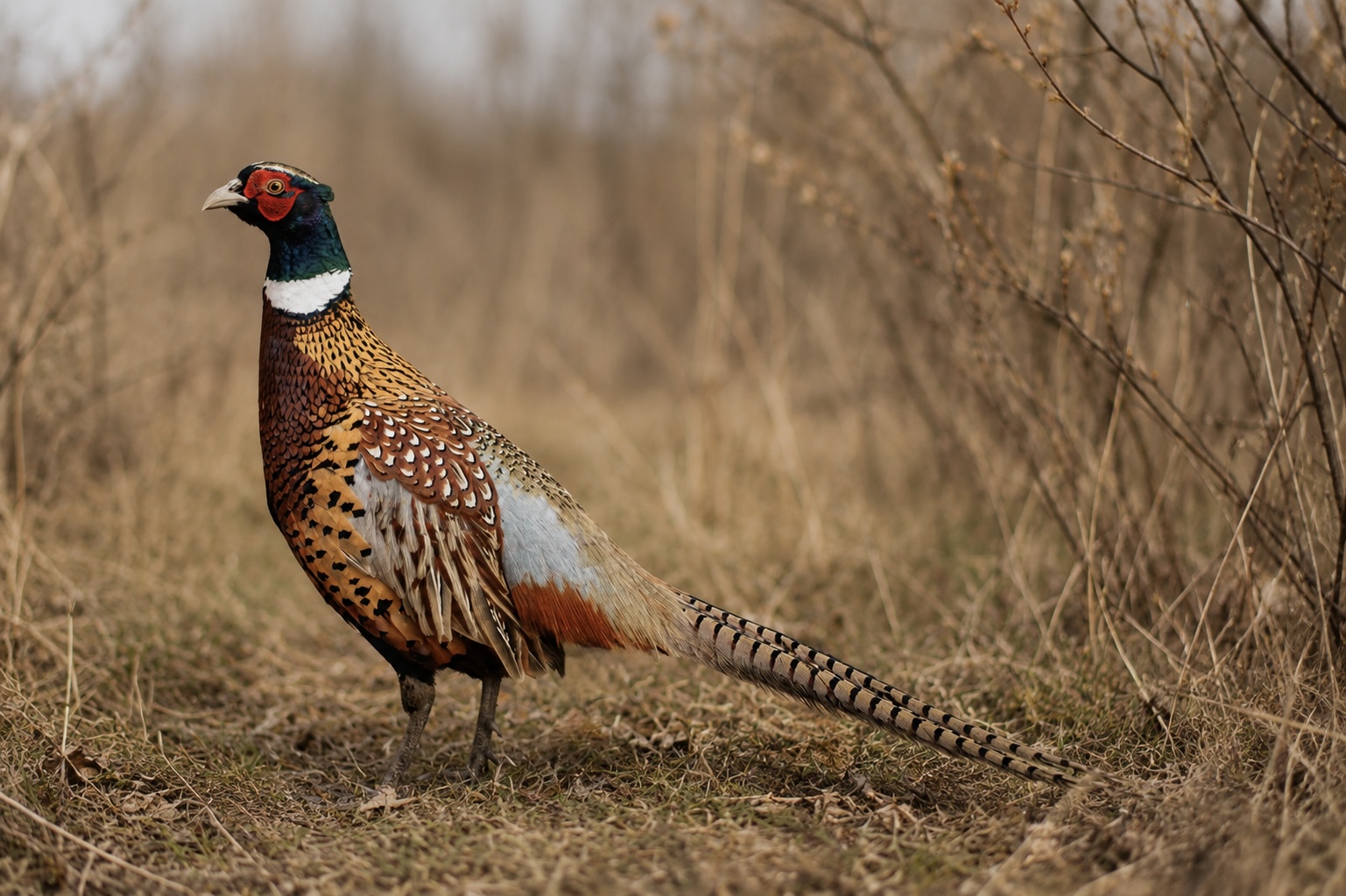 Among the best-known subspecies are:
- Chinese Ring-necked (P. c. torquatus)
- Caucasian (P. c. colchicus)
- Persian (P. c. persicus)
- Manchurian (P. c. pallasi)
- Korean (P. c. karpowi)
- Yarkand (P. c. shawi)
These and many other subspecies have contributed to modern game farm strains raised throughout North America and Europe.
The Ring-necked Pheasant in North America
The Ring-necked Pheasant (Phasianus colchicus) is the world’s most widely distributed pheasant.
Originally native to Asia, the species was introduced into North America during the late 1800s. Thanks to successful introductions and abundant agricultural habitat, Ring-necked Pheasants quickly became one of the continent’s premier upland gamebirds.
Today, they thrive throughout much of the Midwest, Great Plains, and western United States, particularly where grasslands and row crop agriculture provide ideal nesting and feeding habitat.
At MacFarlane Pheasants, many of the birds raised for hunting preserves and conservation efforts trace their heritage to these highly adaptable Ring-necked Pheasant lineages.
Peacock-Pheasants (Polyplectron)
Despite their common name, Peacock-Pheasants are more closely related to pheasants than peafowl.
Their name comes from the spectacular iridescent eye spots, called ocelli, decorating their feathers.
Modern taxonomy recognizes eight species, including:
- Grey Peacock-Pheasant
- Mountain Peacock-Pheasant
- Bronze-tailed Peacock-Pheasant
- Malay Peacock-Pheasant
- Bornean Peacock-Pheasant
- Palawan Peacock-Pheasant
- Germain’s Peacock-Pheasant
- Rothschild’s Peacock-Pheasant
These shy forest birds inhabit dense tropical rainforests across Southeast Asia and are rarely observed in the wild.
Unlike Ring-necked Pheasants, many Peacock-Pheasants spend much of their lives hidden beneath dense forest canopies.
Argus Pheasants
Argus Pheasants are among the largest and most visually stunning members of the pheasant family.
Great Argus (Argusianus argus)
The Great Argus possesses perhaps the most elaborate courtship display of any pheasant.
During breeding season, males spread their enormous secondary wing feathers into a fan decorated with hundreds of intricate eye-like markings. Females inspect these displays before choosing a mate.
The Great Argus inhabits tropical forests in Malaysia, Sumatra, and Borneo.
Crested Argus (Rheinardia ocellata)
The Crested Argus is even more secretive than its larger cousin.
Found in the forests of Vietnam, Laos, and Malaysia, males possess extraordinarily long central tail feathers and beautifully patterned plumage that blends seamlessly into the forest floor.
Both Argus species rely heavily on intact tropical forests, making habitat conservation essential for their long-term survival.
How Taxonomy Continues to Evolve
One of the most exciting aspects of ornithology is that bird classification continues to change as new discoveries are made.
Advances in DNA sequencing have helped scientists better understand how pheasants evolved over millions of years. As a result:
- Some former subspecies have become full species.
- Some species have been combined after genetic analysis.
- Relationships between genera continue to be refined.
- New conservation priorities have emerged based on improved classifications.
While the overall structure of the pheasant family remains stable, researchers regularly publish updates as new evidence becomes available.
Pheasants Raised by MacFarlane Pheasants
Although the pheasant family includes dozens of species found throughout Asia, MacFarlane Pheasants specializes in raising gamebirds that excel for hunting preserves, conservation projects, and landowners across North America.
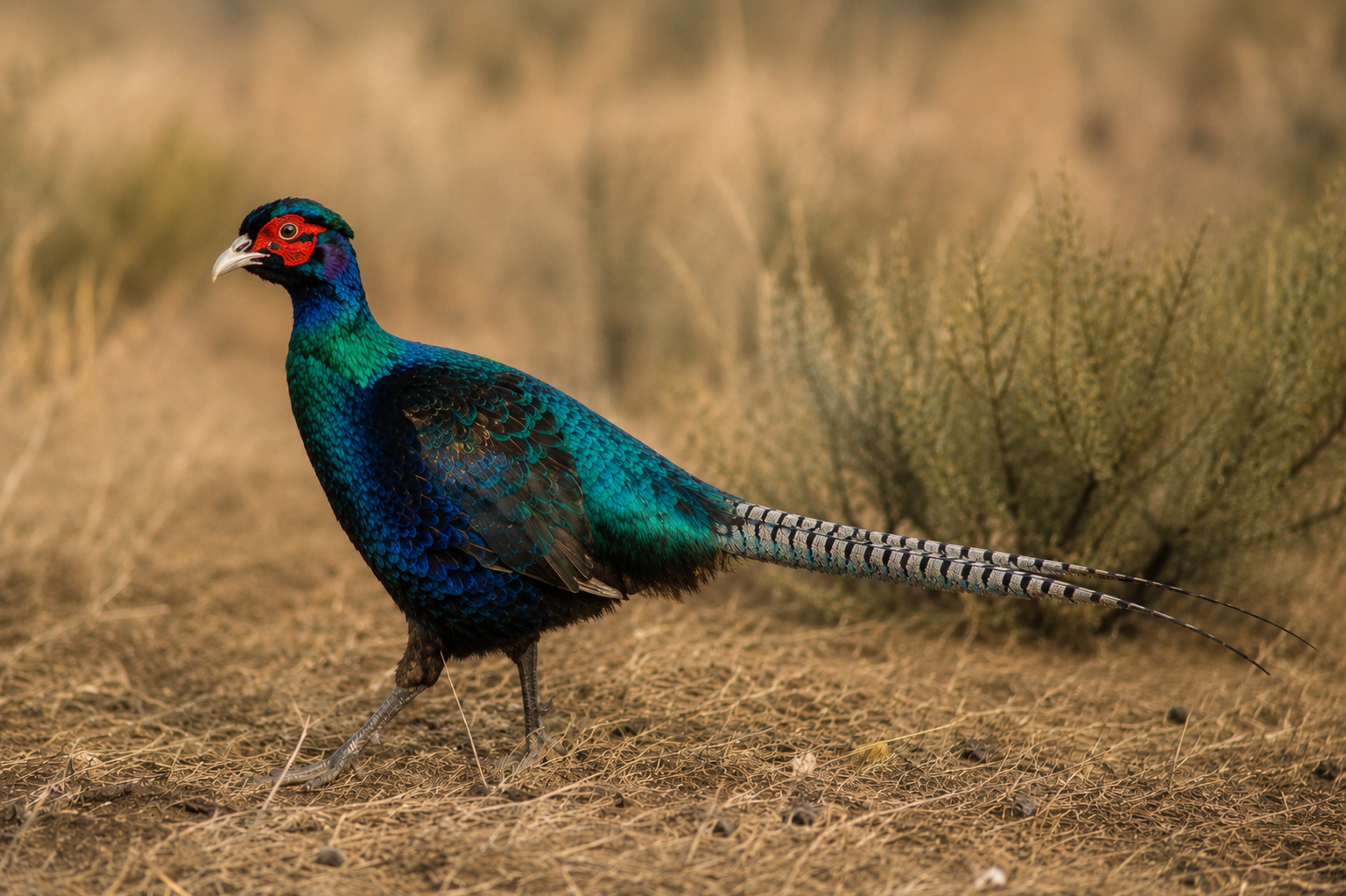 Our offerings include:
- Ring-necked Pheasants
- Kansas Ring-necked Pheasants
- Extra Large Ring-necked Pheasants
- Melanistic Mutant Pheasants
- Chukar Partridge
- Hungarian Partridge
- Redleg Partridge
Each has been carefully selected for desirable characteristics such as strong flight ability, excellent health, and dependable field performance.
If you’re interested in learning more about these birds, explore our individual breed pages to compare their appearance, behavior, habitat preferences, and ideal uses.
Learn More About Bird Taxonomy
Bird classification is continually refined as new genetic and evolutionary research becomes available. For the most current scientific classifications and species lists, these organizations are excellent references:
- IOC World Bird List: https://www.worldbirdnames.org/
- AviList, the unified global bird checklist developed by leading ornithological organizations: https://www.avilist.org (introduced in 2025)
- Cornell Lab of Ornithology and eBird for species information, identification, and distribution: https://www.allaboutbirds.org and https://ebird.org
- BirdLife International: https://www.birdlife.org/
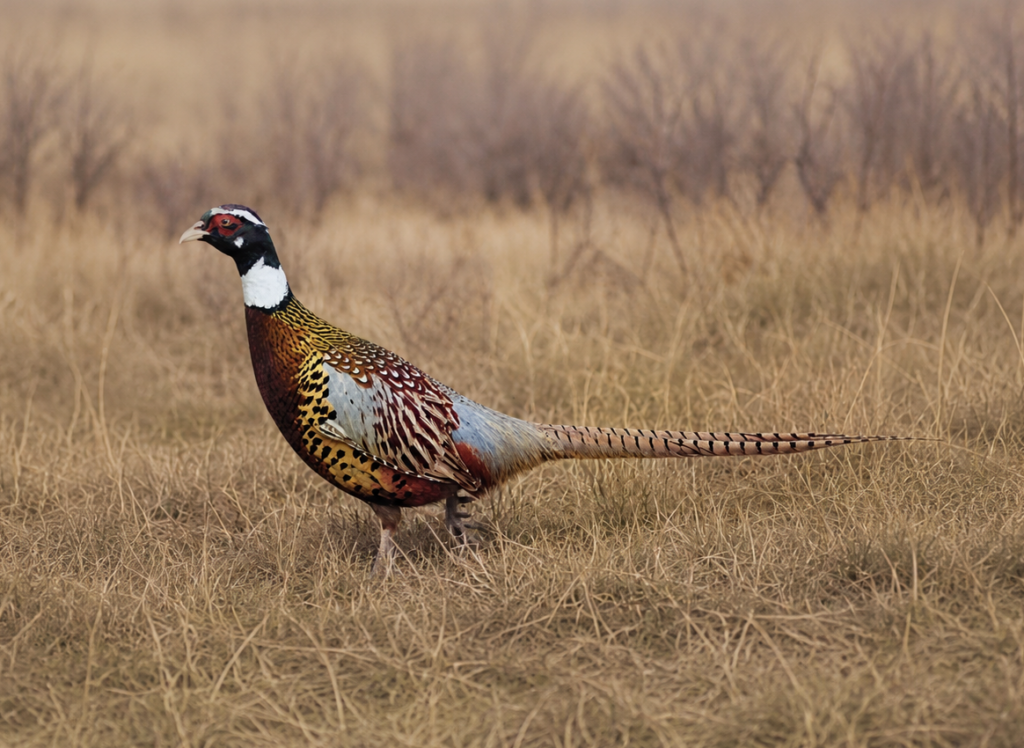 Do Pheasants Make Good Pets?
 How Much Space Do Pheasants Need? A Guide to Brooder, Feeder & Water Space
Related Posts

How to Hatch Pheasant Eggs: 10 Expert Tips for Incubating Pheasant Eggs Successfully
Read Post

Choosing the Best Bedding for Pheasants and Gamebirds
Read Post
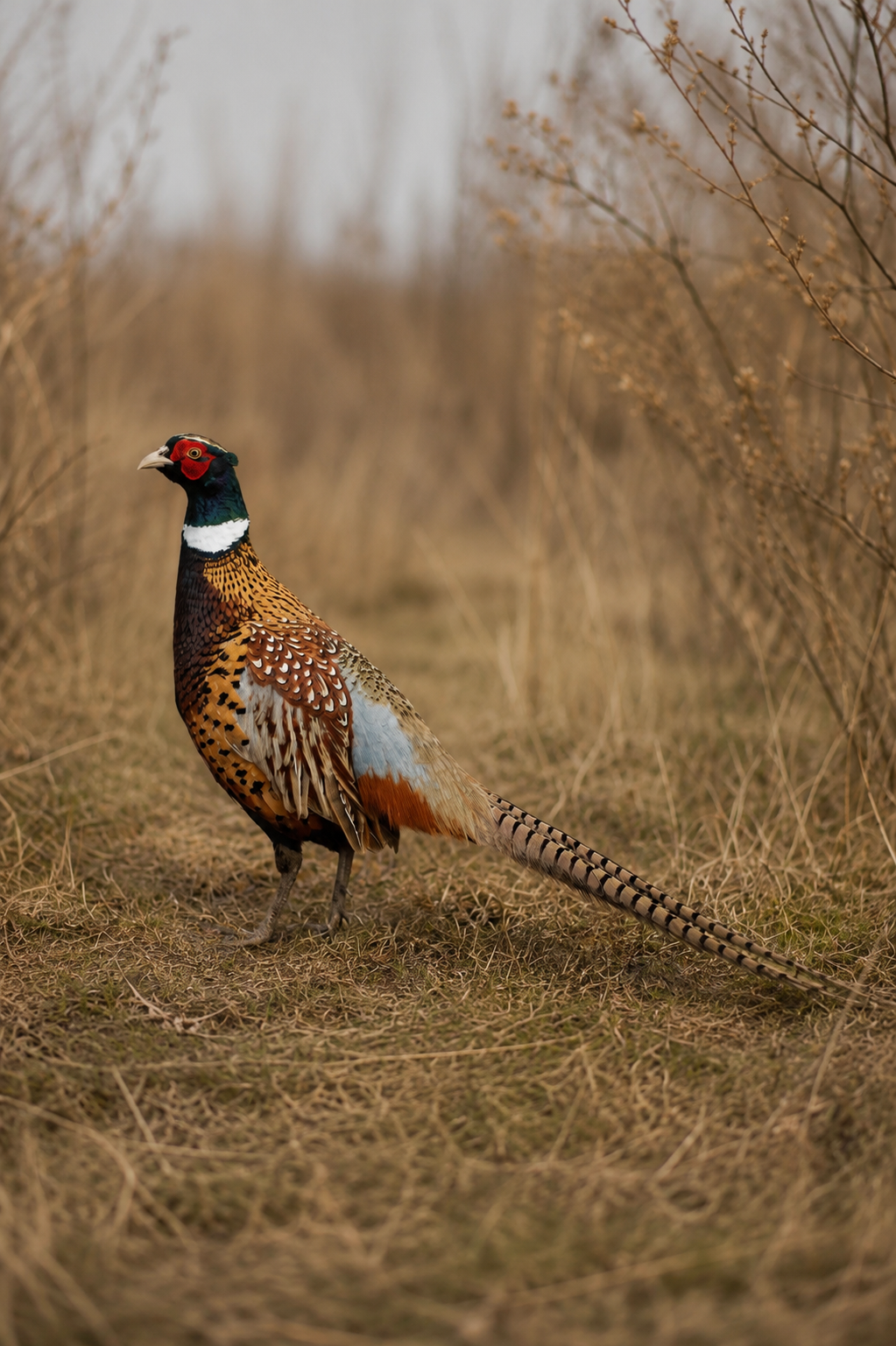
How Much Do Mature Pheasants Cost?
Read Post
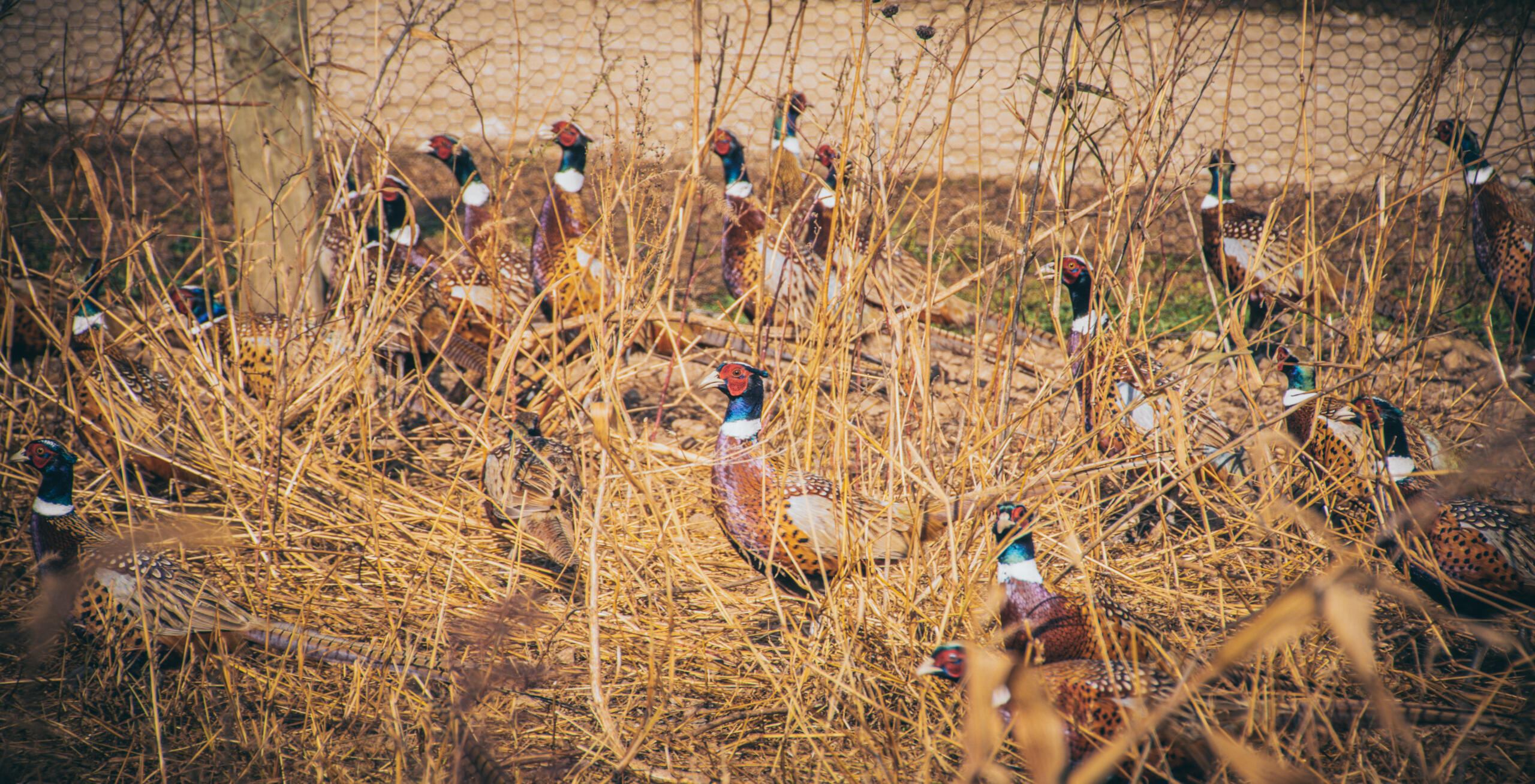
Popular Gamebird Breeds and What Makes Each One Unique
Read Post

How Much Space Do Pheasants Need? A Guide to Brooder, Feeder & Water Space
Read Post

Flight Pen Construction: A Step-by-Step Look
Read Post

Do Pheasants Make Good Pets?
Read Post
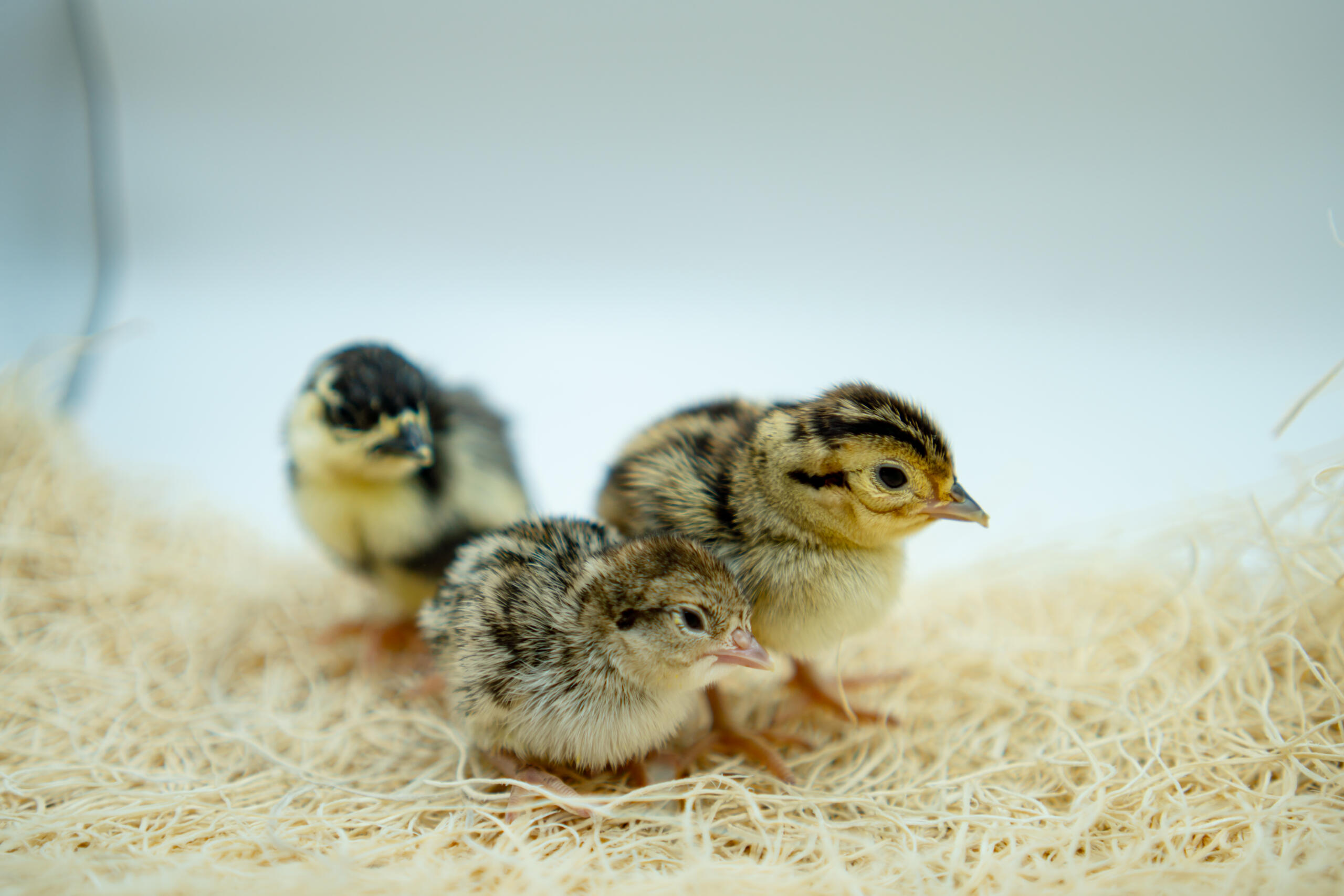
Is It Difficult to Raise Pheasants?
Read Post
Take Advantage of These Free Resources
As the biggest gamebird farm in the United States, we want to share our experience with you. Download our free resources below and get started.