How We Improved Redleg Partridge Chick Survival Rates
Raising Redleg partridges can present some unique challenges, especially during the brooding stage. These small, sensitive gamebirds require careful management, and at MacFarlane Pheasants, we’ve learned that even seemingly minor changes to their environment can make a significant difference.
Our Redleg partridge brooding program once experienced higher chick mortality rates than our other gamebird programs. We knew something needed to change, so our team took a fresh look at our brooding practices and made three important adjustments.
The results? A substantial reduction in chick mortality and some valuable lessons about raising Redleg partridges.
Here’s what we changed and what we learned along the way.
Adjusting Brooder Lighting to Prevent Chicks From Piling
One of the biggest challenges when brooding Redleg partridge chicks is preventing piling. When chicks crowd tightly together, especially in corners, birds can become trapped underneath others, resulting in injuries or death.
Our team discovered that lighting could play an important role in reducing this behavior. As one team member explained, “the trick is to treat the chicks like they’re afraid of the dark.”
We removed light bulbs from the corners of our brooder rooms, creating darker areas that the chicks naturally avoided. Instead of congregating in corners where piling was more likely, the birds moved toward the better-lit center of the room, where they had more space.
This relatively simple adjustment resulted in a dramatic reduction in piling incidents.
What we learned: Strategic lighting adjustments can help influence where chicks gather and reduce dangerous crowding in brooder rooms.
Rethinking Our Brooder and Overhead Lighting System
Our second major improvement involved changing how we used brooder lights and overhead ceiling lights.
Traditionally, our brooding program used both lighting systems together. As the chicks grew, we gradually transitioned them away from the brooder lights until they were using only the overhead ceiling lights.
After speaking with a local grower, our team decided to reverse that approach.
Rather than gradually eliminating the brooder lights, we adjusted our lighting schedule to transition away from the overhead lights instead.
This change also helped reduce piling incidents among our Redleg partridge chicks.
It was a valuable reminder that sometimes improving established practices means being willing to try something different.
What we learned: The way lighting systems are used together can affect chick behavior, and reevaluating established routines may reveal opportunities to improve survival rates.
Modifying Feed Systems to Protect Smaller Partridge Chicks
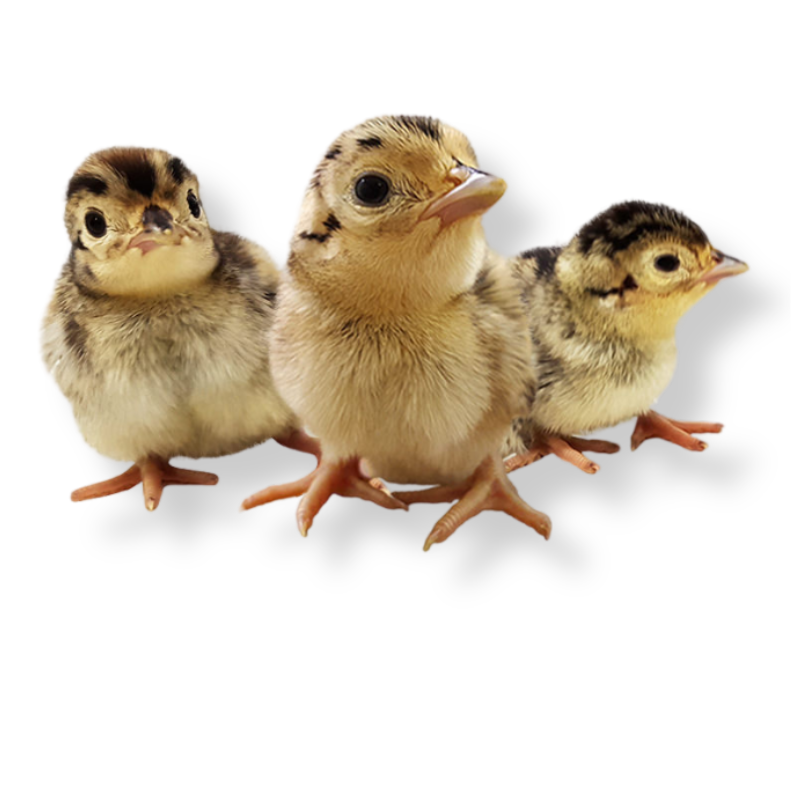
Perhaps the most significant improvement involved our feeding equipment. Redleg partridge chicks are approximately one-third the size of pheasant chicks. Despite this substantial size difference, we had previously used the same feeding systems for both species. Unfortunately, the smaller partridge chicks could climb into the feed tubes through the connected feed pans. Once inside, they sometimes became trapped and died.
The problem was serious. During the first week, we experienced hundreds of chick losses associated with the feeding system.
Our team knew we needed a safer solution. We removed the feed pans that allowed chicks to access the tubes and replaced them with separate feed trays. These trays were positioned approximately 10 inches away from the feed lines, preventing the chicks from entering the equipment. The modification substantially reduced mortality by eliminating a major hazard for the smaller birds.
Interestingly, the inspiration for this improvement came from a brochure that showed our team a different way to configure the existing feeding equipment.
What we learned: Equipment designed for larger gamebirds may not be appropriate for smaller species. Evaluating feeders, waterers, and other brooding equipment based on chick size is essential.
The Importance of Listening, Learning, and Making Changes
Looking back, our team credits much of the program’s improvement to being willing to listen to others and reconsider familiar practices.
Some of the most helpful ideas came from unexpected places. A brochure inspired the feeding system modifications. A conversation with a local grower, just one week before the first chicks were scheduled to hatch, led to changes in our lighting practices.
One team member summed up the approach with a little humor: “I refuse to do worse than other people.”
But behind that determination was a willingness to learn and make improvements. “I basically took everything I was afraid of and changed it.”
And perhaps the most important lesson: “I listened to what everyone was saying.”
Those words reflect an important part of how we approach raising gamebirds at MacFarlane Pheasants. Experience matters, but so does remaining open to new ideas and recognizing when something isn’t working.
Raising Redleg Partridges at MacFarlane Pheasants
These three changes to our Redleg partridge brooding program helped us significantly reduce chick mortality:
- Darkening brooder room corners to discourage chicks from piling in confined spaces.
- Changing our approach to brooder and overhead lighting to help reduce crowding.
- Modifying feeding equipment to prevent smaller partridge chicks from entering feed tubes and becoming trapped.
While every gamebird operation is different, our experience demonstrates how closely observing bird behavior, identifying potential hazards, and making targeted adjustments can improve outcomes.
At MacFarlane Pheasants, we’re continually learning and refining our practices to raise healthy, high-quality gamebirds.
Interested in Raising or Purchasing Redleg Partridges?
Whether you’re looking for Redleg partridges for your hunting preserve or want to learn more about the gamebirds we raise, our experienced team is happy to help. Contact MacFarlane Pheasants to learn more about our Redleg partridges, availability, and ordering options.

Related Posts
Shipping Chicks Safely During Cold Weather Months
Read Post
Preparing Our Barns & Pens Each Spring
Read Post
A Comparison of Hatch Data Between Two Different Genetic Types of Pheasants
Read Post
DuPont Financial Analysis Model
Read Post
Post Office Tells FedEx to Start Carrying Live Animals
Read Post
MacFarlane Pheasants is Using 4-Wheelers for Farm Upkeep
Read Post
How We Prepare For Brooding Our Chicks
Read Post
How We Winterize at Our Milton Farm
Read Post
Take Advantage of These Free Resources
As the biggest gamebird farm in the United States, we want to share our experience with you. Download our free resources below and get started.