
Ringneck Pheasant Breeds: How to Choose the Right Bird
Ringneck pheasants are some of the most popular game birds raised for hunting, release, and propagation, but not every Ringneck is the same. Size, flight characteristics, temperament, appearance, and adaptability can vary depending on the genetics of the bird.
At MacFarlane Pheasants, we have spent generations selectively breeding pheasants to provide customers with birds suited to different needs. A hunting preserve looking for a fast, challenging flyer may have different priorities than a landowner purchasing pheasants for a release program. Instead of trying to produce a single bird for every situation, we have developed and maintained several types of Ringneck pheasants.
Understanding those differences can help you choose the best pheasant breed for your property, preserve, or program.
What Is a Ringneck Pheasant?
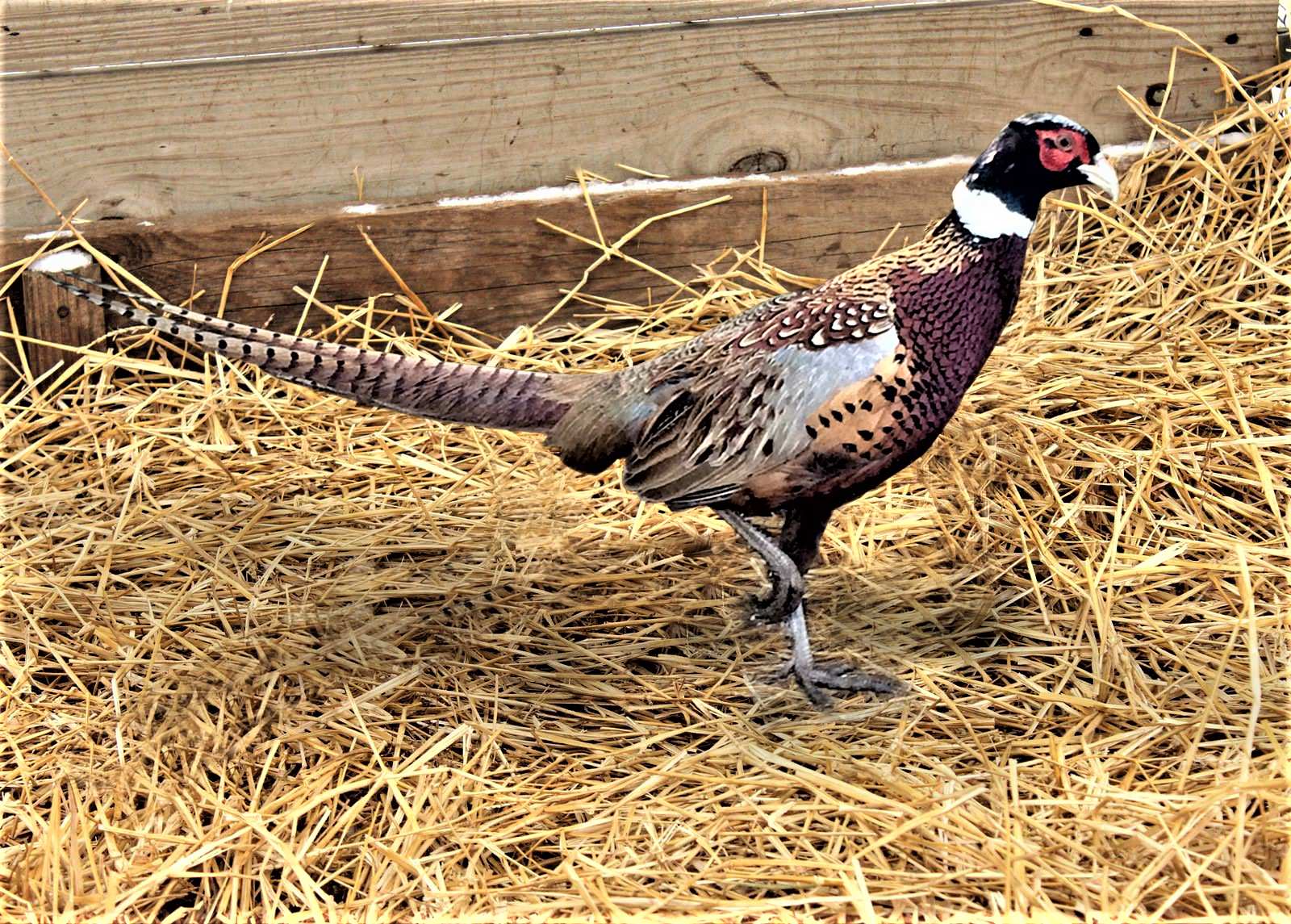
The Ringneck pheasant is one of the most recognizable game birds in North America. Male Ringnecks are known for their colorful plumage, long tails, red facial patches, and the distinctive white neck ring commonly seen in many strains. Hens have more subdued brown coloring that provides natural camouflage.
Ringneck pheasants are valued as game birds because of their strong flight, adaptability, and ability to thrive in a variety of environments.
Within the broader Ringneck category, selective breeding and different genetic lines can produce birds with noticeably different characteristics. At MacFarlane Pheasants, some of our Ringneck varieties have been developed for stronger flight, larger size, wild characteristics, or performance in particular environments.
Here are some of the Ringneck pheasant options we have raised and what makes each unique.
Chinese Ringneck Pheasant
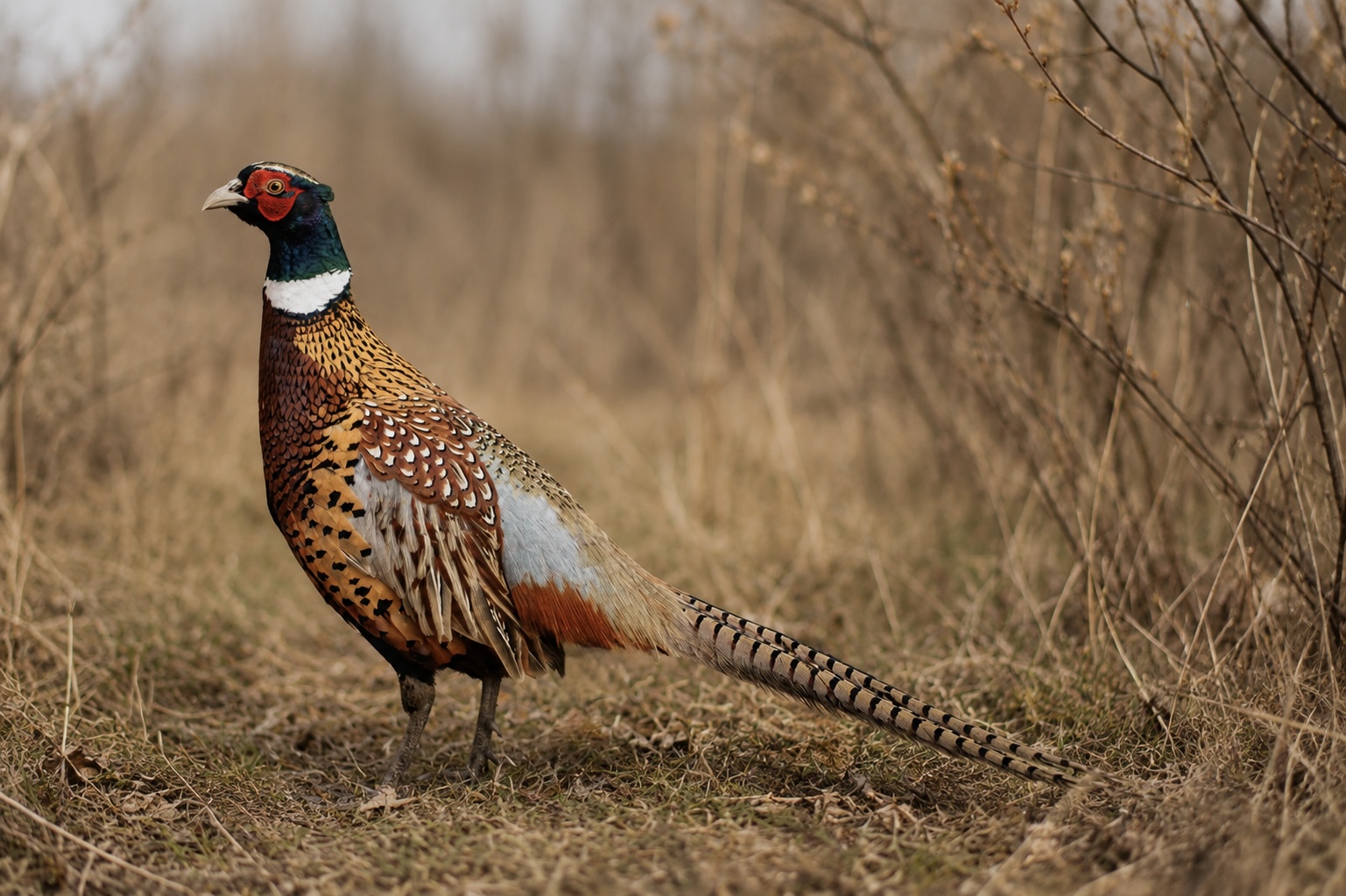
The Chinese Ringneck is our most popular pheasant and a great all-around choice for many customers.
Mature Chinese Ringneck cocks typically weigh about 2.7 to 3 pounds, while hens generally weigh between 1.7 and 2.2 pounds. Their combination of brilliant coloration, manageable size, and excellent flying ability has made them a standard choice for hunting and propagation.
Chinese Ringnecks are particularly popular with hunting preserves because they are strong flyers and perform well in many different areas of the country.
Chinese Ringnecks are a good choice for:
- Hunting preserves
- Private hunting properties
- Release programs
- Customers looking for a versatile Ringneck pheasant
For many customers who aren’t looking for a highly specialized bird, the Chinese Ringneck is an excellent place to start.
Manchurian Cross Pheasant
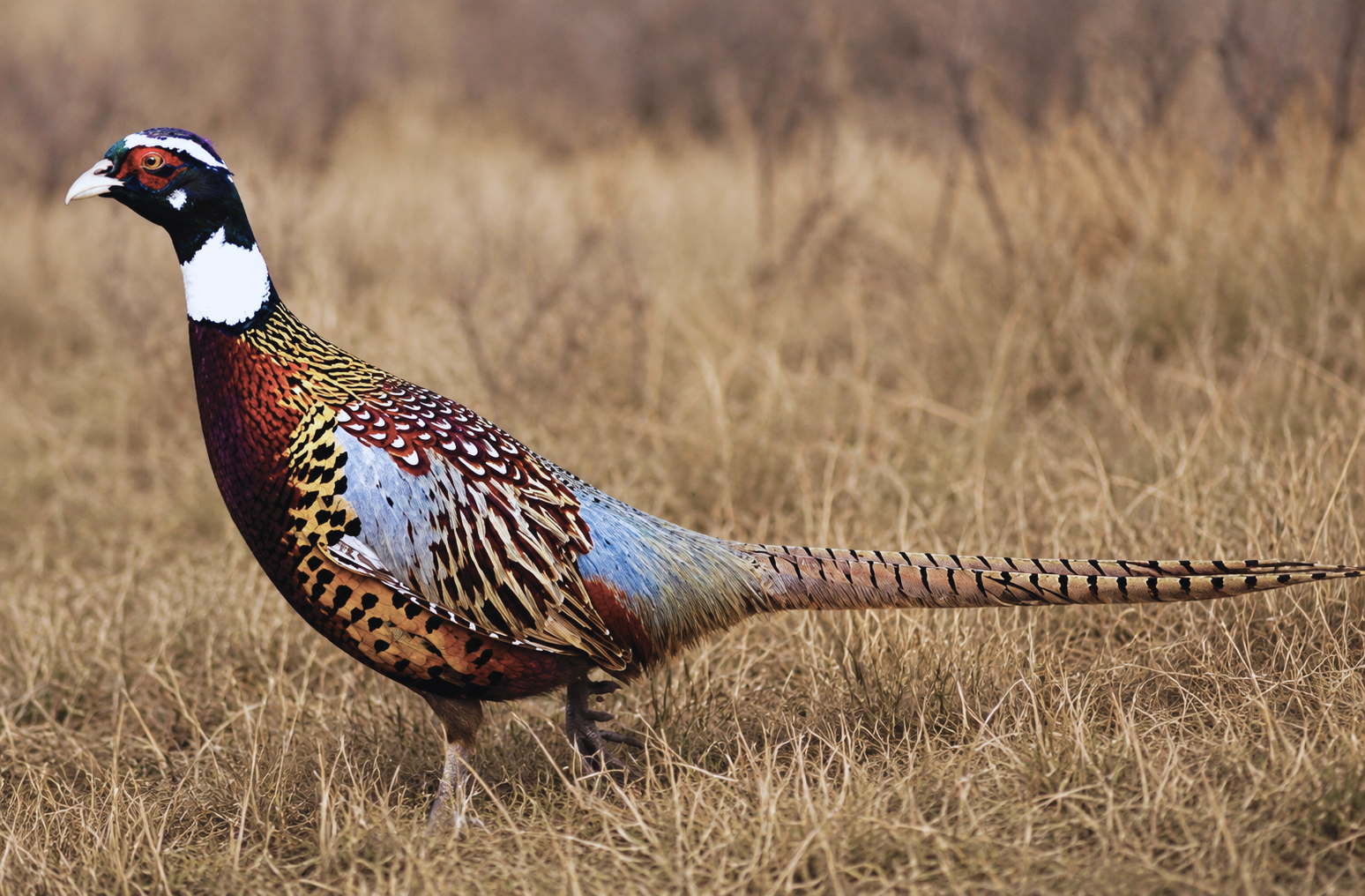
The Manchurian Cross has a particularly important history at MacFarlane Pheasants.
Our line originated after MacFarlane Pheasants imported wild Manchurian pheasants from China in 1989. Those birds were crossed with our Chinese Ringnecks to produce a hardy, vigorous pheasant with strong wild characteristics. Learn more about the Manchurian history here.
Manchurian Cross pheasants can be distinguished by characteristics such as a prominent white neck band and a white feather near the side of the head.
More importantly for many customers, these birds are known for their wild behavior and strong performance in the field. They have historically been a popular option for release and propagation programs.
Manchurian Cross pheasants are known for:
- Wild characteristics
- Strong flight
- Hardiness and vigor
- Release and propagation potential
- A challenging hunting experience
Customers looking for a pheasant with especially strong wild characteristics may want to consider the Manchurian Cross.
Kansas Ringneck Pheasant

The Kansas Ringneck offers something different from the standard Chinese Ringneck. It is a smaller, lightweight bird known for speed and strong flight.
Kansas Ringneck cocks generally weigh around 2.25 to 2.4 pounds, while hens typically weigh between 1.4 and 1.7 pounds. That makes them approximately 20% smaller than our standard Chinese Ringnecks.
Sometimes referred to as a “blue-back,” the Kansas Ringneck has become popular with hunting preserves looking for a fast-flying bird. Its smaller frame, strong tail feathers, and flight characteristics can make for an exciting bird in the field.
The Kansas Ringneck can also be a good option in warmer regions of the United States.
Kansas Ringnecks are a good choice for customers looking for:
- A smaller Ringneck pheasant
- Fast, strong flight
- A bird suited to hunting preserves
- Good performance in warmer climates
Extra Large Ringneck Pheasant
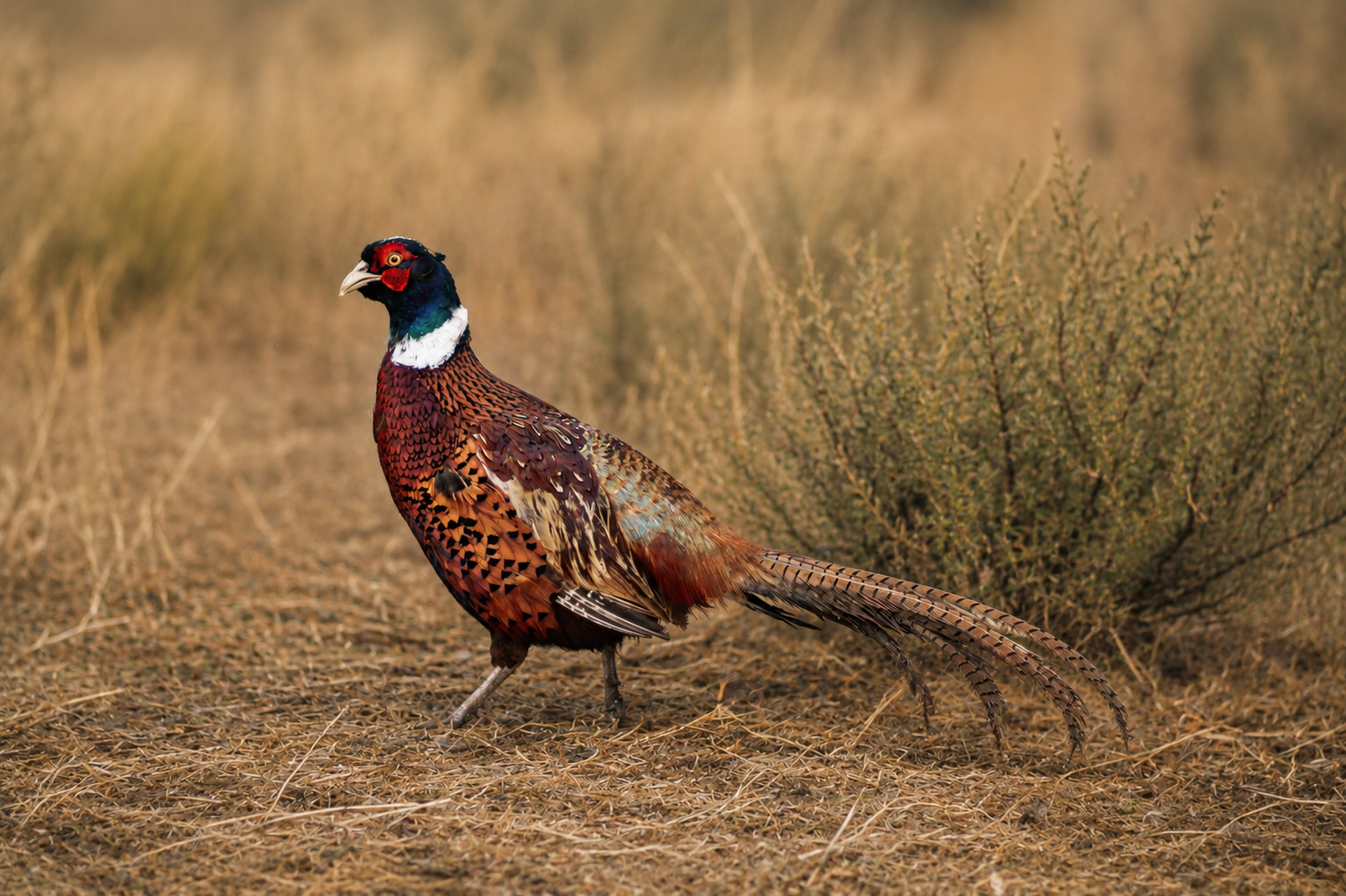
For customers who prefer a larger pheasant, the Extra Large Ringneck provides another option.
These birds are approximately 20% larger than our standard Chinese Ringneck and have historically been particularly popular with hunting preserves and customers looking for a larger bird.
Despite their increased size, they maintain the appearance and characteristics people associate with Ringneck pheasants.
Extra Large Ringnecks may be a good fit for:
- Hunting preserves wanting a larger pheasant
- Customers who prefer a heavier bird
- Programs looking for an alternative to the standard Chinese Ringneck
Availability can vary throughout the hatching and mature bird seasons, so ordering early is recommended when a specific variety is important.
Which Ringneck Pheasant Breed Is Best?
The best Ringneck pheasant depends on what you want from your birds.
For a versatile bird with excellent flight and classic coloration, the Chinese Ringneck remains our most popular choice. Customers interested in stronger wild characteristics may prefer birds with Manchurian genetics, while the Kansas Ringneck is an excellent option for those looking for a smaller, fast-flying pheasant. Customers wanting more size may prefer the Extra Large Ringneck.
When comparing pheasant breeds, consider:
- How the birds will be used
- Your property’s location and climate
- Desired bird size
- Flight characteristics
- Whether birds are intended for hunting, release, or propagation
- Current availability of the breed
There isn’t one Ringneck pheasant that’s best for every customer. That’s exactly why MacFarlane Pheasants has continued to maintain different genetics and breeding programs over the years.
Choosing Quality Pheasants for Hunting and Release
Breed is only one consideration when choosing pheasants. The way birds are bred and raised also matters.
Strong genetics, proper nutrition, appropriate housing, good health management, and plenty of room for birds to develop all contribute to the quality of the finished bird. For hunting and release customers in particular, flight ability is an important consideration.
At MacFarlane Pheasants, our breeding programs have been developed over generations with these characteristics in mind. We offer both pheasant chicks for customers who want to raise their own birds and mature pheasants for customers who want birds ready for release.
Our mature birds originate from our farm in Janesville, Wisconsin, and are delivered throughout the United States using our own fleet of trucks.
Need Help Choosing a Ringneck Pheasant?
With several Ringneck pheasant varieties available, it’s understandable to have questions about which one is the best fit.
Our team can help you compare your options based on your location, acreage, how you plan to use the birds, and the characteristics that are most important to you.
Whether you’re ordering pheasant chicks to raise yourself or mature pheasants for a hunting preserve or release program, contact MacFarlane Pheasants to discuss current availability and find the Ringneck pheasant that best fits your needs.
 A Legacy of Collaboration: Reflections on Bill’s Final Seminar
 What Can Pheasants Eat? Foods to Feed and Foods to Avoid
Related Posts

Preparing Our Barns & Pens Each Spring
Read Post
Our Milton Farm in 2024!
Read Post
10 Steps to Prepare for a Delivery of Mature Game Birds
Read Post
4 Steps to Keeping Pheasants Healthy in Winter
Read Post
6 Feed and Water Procedures to Keep MacFarlane Pheasants Healthy
Read Post
Breeding Pheasants with Beautiful Tails
Read Post
Can Goats Be Helpful on a Pheasant Farm?
Read Post
Catching Mature Pheasants
Read Post
Take Advantage of These Free Resources
As the biggest game bird farm in the United States, we want to share our experience with you. Download our free resources below and get started.